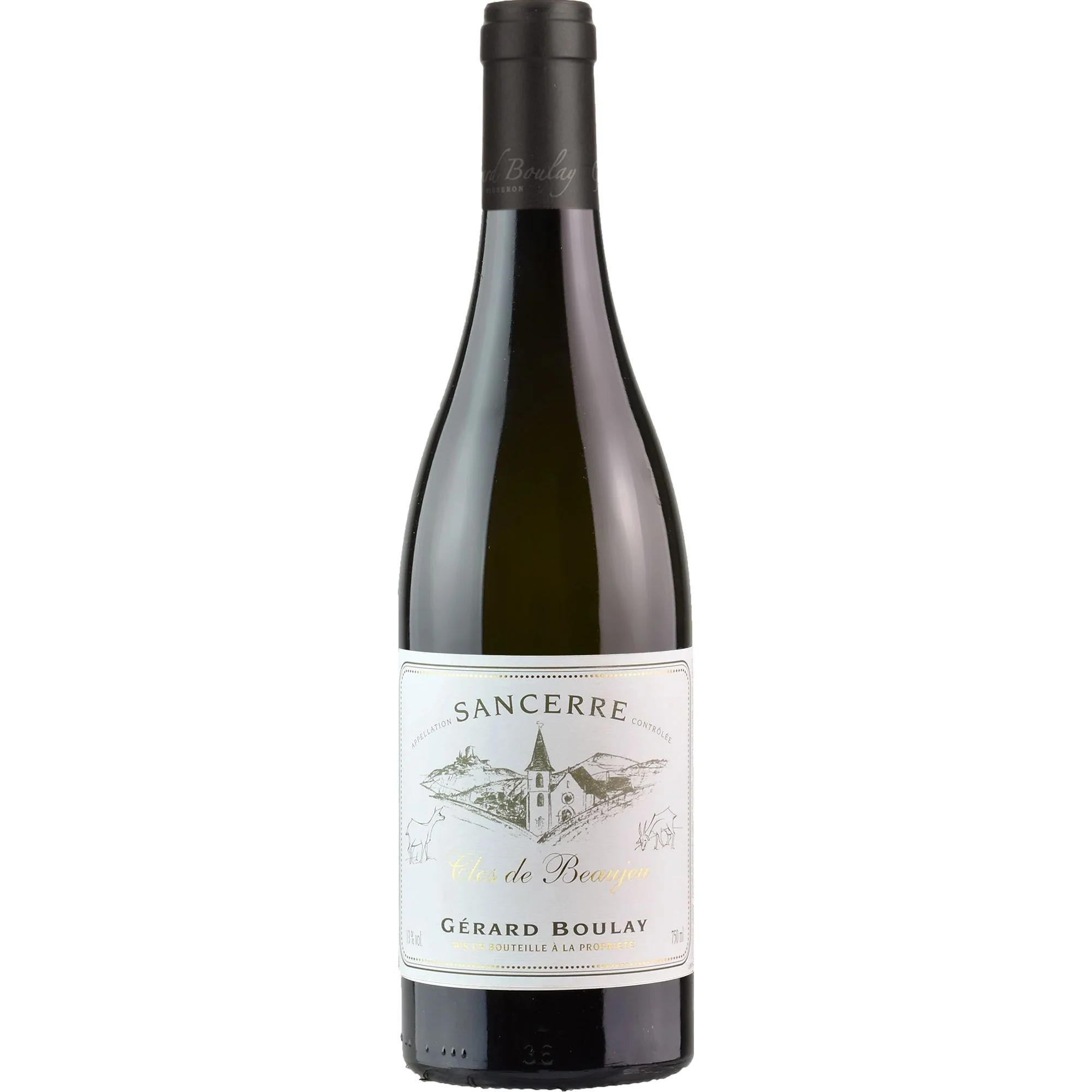
Domaine Gérard Boulay Sancerre Clos Beaujeu 2023
Le Clos de Beaujeu is one of Boulay’s thoroughbred historic sites. Boulay farms two parcels in this terroir, including one within the original clos, established by the monks of Beaujeu in the Middle Ages. This parcel is historically known as Le Grand Clos. For this reason, Boulay names this wine Clos de Beaujeu rather than the more ubiquitous Cul de Beaujeu. In his book Le Vignoble de Chavignol, Thibaut Boulay notes that this vineyard first appears in documents dating to 1328 as the Clausus de Bellojoco, indicating this terroir’s age-old origins.
Vines on this slope of Kimmeridgian limestone and clay (terre blanches) sit between 30 and (a remarkable) 110 years old. The soils here are particularly rocky—limestone-rich and strewn with fossils—making this parcel difficult to farm. A second, even steeper parcel at a 60% gradient lies closer to the village. These southeast-facing Clos de Beaujeu plots grow some of the domaine’s most structured, verdant and nervy wines. This cuvée ferments spontaneously and rests in large, upright cask (60%) and three- and four-year-old 300-litre barrels (40%) for 10 months.
The energy is apparent from the first sniff: wet rocks, apple skin and Key lime zest waft from the glass. It’s a multifaceted, vibrant, mineral-etched Sancerre, still tightly wound on the palate, underscored by superb extract, ripe green citrus fruit and fantastic grippy length. There are also some oh-so-subtle fennel notes (related to the reduction this site always throws) on the lacy, tangy close. As impressive as this is now, this grand-cru quality wine will evolve beautifully in bottle, providing years of enjoyment ahead.
Product Information
Product Information
Shipping & Returns
Shipping & Returns
Description
Le Clos de Beaujeu is one of Boulay’s thoroughbred historic sites. Boulay farms two parcels in this terroir, including one within the original clos, established by the monks of Beaujeu in the Middle Ages. This parcel is historically known as Le Grand Clos. For this reason, Boulay names this wine Clos de Beaujeu rather than the more ubiquitous Cul de Beaujeu. In his book Le Vignoble de Chavignol, Thibaut Boulay notes that this vineyard first appears in documents dating to 1328 as the Clausus de Bellojoco, indicating this terroir’s age-old origins.
Vines on this slope of Kimmeridgian limestone and clay (terre blanches) sit between 30 and (a remarkable) 110 years old. The soils here are particularly rocky—limestone-rich and strewn with fossils—making this parcel difficult to farm. A second, even steeper parcel at a 60% gradient lies closer to the village. These southeast-facing Clos de Beaujeu plots grow some of the domaine’s most structured, verdant and nervy wines. This cuvée ferments spontaneously and rests in large, upright cask (60%) and three- and four-year-old 300-litre barrels (40%) for 10 months.
The energy is apparent from the first sniff: wet rocks, apple skin and Key lime zest waft from the glass. It’s a multifaceted, vibrant, mineral-etched Sancerre, still tightly wound on the palate, underscored by superb extract, ripe green citrus fruit and fantastic grippy length. There are also some oh-so-subtle fennel notes (related to the reduction this site always throws) on the lacy, tangy close. As impressive as this is now, this grand-cru quality wine will evolve beautifully in bottle, providing years of enjoyment ahead.