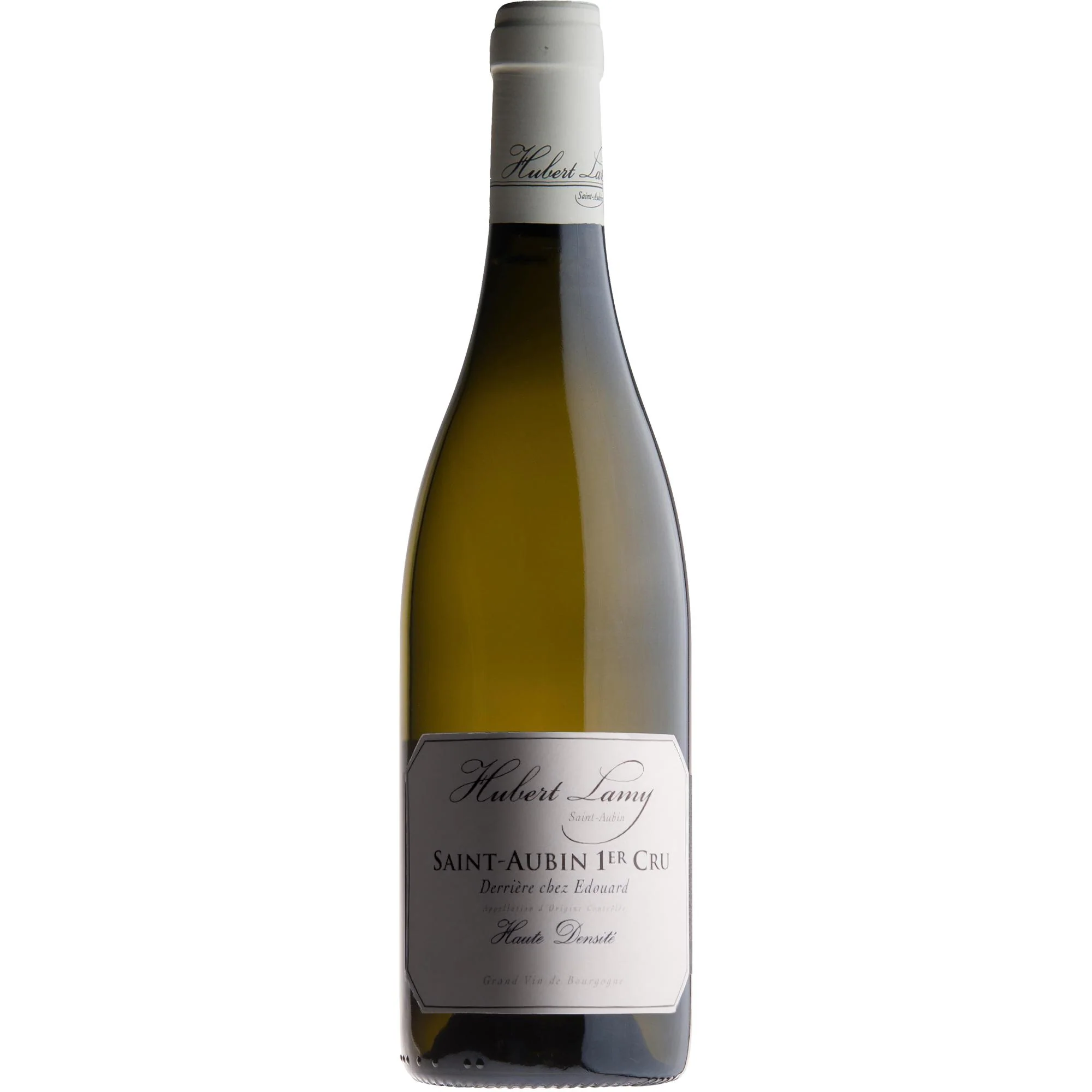
Domaine Hubert Lamy Saint-Aubin 1er Cru Derrière chez Edouard Cuvée Haute Densité Blanc 2023
This singular wine comes from 0.7 hectares planted at a density of 30,000 vines per hectare more than 20 years ago. The vines are at the top of the vineyard, where the soil is incredibly rocky and the mesoclimate is the coolest. They are spaced around 30cm apart from each other along the axis of the row, and the row width is one metre. At such a density, Lamy typically gets a maximum of three tiny clusters per vine (sometimes one, sometimes none!), and the entire plot only yields enough juice to fill the contents of a barrel or two. This plot produces completely different wines from the rest of the vineyard and subsequently led Lamy to increase the density in several other parcels, including Les Tremblots (Puligny; 22,000 vines/ha) and Criots-Bâtard-Montrachet (24,000 vines/ha). As you would imagine, distributor allocations of Lamy’s Haute Densité cuvées rarely top more than a few cases, and the wines are no longer tasted in the cellar.
How does this differ from the other cuvée from the same site? The general rule is more intensity, salinity and mineral concentration—even though that is hard to imagine. It’s like the vines are sucking even more from their rocky soils, and the result is something totally unique. It’s no exaggeration to call this a wine of immense historical importance. Like a lot of Lamy’s work in the vines (recall that this vigneron brought Poussard pruning back to Burgundy), it has given many growers pause for thought, helping them reflect much more deeply on the ways that their vines are planted and managed.
Original: $947.96
-65%$947.96
$331.79Product Information
Product Information
Shipping & Returns
Shipping & Returns
Description
This singular wine comes from 0.7 hectares planted at a density of 30,000 vines per hectare more than 20 years ago. The vines are at the top of the vineyard, where the soil is incredibly rocky and the mesoclimate is the coolest. They are spaced around 30cm apart from each other along the axis of the row, and the row width is one metre. At such a density, Lamy typically gets a maximum of three tiny clusters per vine (sometimes one, sometimes none!), and the entire plot only yields enough juice to fill the contents of a barrel or two. This plot produces completely different wines from the rest of the vineyard and subsequently led Lamy to increase the density in several other parcels, including Les Tremblots (Puligny; 22,000 vines/ha) and Criots-Bâtard-Montrachet (24,000 vines/ha). As you would imagine, distributor allocations of Lamy’s Haute Densité cuvées rarely top more than a few cases, and the wines are no longer tasted in the cellar.
How does this differ from the other cuvée from the same site? The general rule is more intensity, salinity and mineral concentration—even though that is hard to imagine. It’s like the vines are sucking even more from their rocky soils, and the result is something totally unique. It’s no exaggeration to call this a wine of immense historical importance. Like a lot of Lamy’s work in the vines (recall that this vigneron brought Poussard pruning back to Burgundy), it has given many growers pause for thought, helping them reflect much more deeply on the ways that their vines are planted and managed.