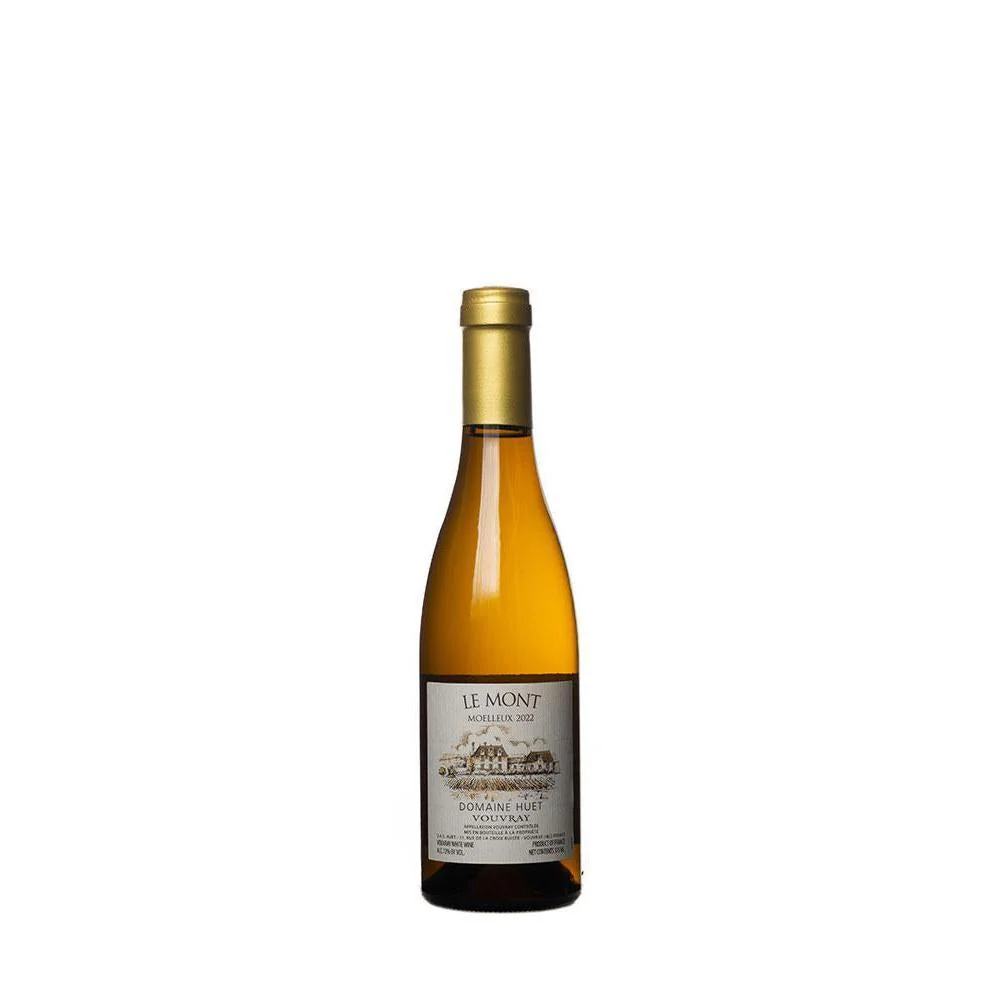
Domaine Huet Vouvray Le Mont Moelleux 2022 (375ml)
Recognised since the 15th century as being one of the most distinguished sites in the appellation, Le Mont was also known locally as Perruches, a local name for the greenish-tinged clay soils flecked with perrons, fist-sized pebbles of flint. Purchased in 1957, the steep, rocky, eight-hectare vineyard lies on Vouvray’s esteemed Première Côte, part of a bank of limestone-rich hillside vineyards overlooking Tours. This block's argilo-siliceux soils (stony, with green, mineral clays and flint over limestone) provide the tight structure and pungent minerality Le Mont is renowned for. With less clay (and a different type of clay) and more stone than Le Haut-Lieu, this site typically produces the nerviest wines in the Huet stable, so this vineyard mainly produces dry and off-dry whites.
Huet’s succulent moelleux wines (moelleux translates to ‘marrow-like’ and is pronounced ‘mweh-luh’) typically have between 40 and 60 g/L residual sugar. They are made mainly from grapes that have dried on the vine (passerillage) rather than those affected by botrytis. Huet’s moelleux wines can be remarkably fine and delicate—think of a great Mosel rather than a Sauternes for an idea of weight—and pair brilliantly with cheeses and a range of savoury meat dishes (only wines from the richest years work with fruit-based desserts).
Occasionally, in the top years, the sweeter première trie level is made from a berry-by-berry selection of the very ripest (often botrytis-affected) grapes. The balance is dumbfounding, and these mouthwatering, racy, transparent wines represent some of the greatest whites of France. The première trie wines can also work with desserts—but nothing too sweet (they’re better with cheeses).
Original: $54.06
-65%$54.06
$18.92Product Information
Product Information
Shipping & Returns
Shipping & Returns
Description
Recognised since the 15th century as being one of the most distinguished sites in the appellation, Le Mont was also known locally as Perruches, a local name for the greenish-tinged clay soils flecked with perrons, fist-sized pebbles of flint. Purchased in 1957, the steep, rocky, eight-hectare vineyard lies on Vouvray’s esteemed Première Côte, part of a bank of limestone-rich hillside vineyards overlooking Tours. This block's argilo-siliceux soils (stony, with green, mineral clays and flint over limestone) provide the tight structure and pungent minerality Le Mont is renowned for. With less clay (and a different type of clay) and more stone than Le Haut-Lieu, this site typically produces the nerviest wines in the Huet stable, so this vineyard mainly produces dry and off-dry whites.
Huet’s succulent moelleux wines (moelleux translates to ‘marrow-like’ and is pronounced ‘mweh-luh’) typically have between 40 and 60 g/L residual sugar. They are made mainly from grapes that have dried on the vine (passerillage) rather than those affected by botrytis. Huet’s moelleux wines can be remarkably fine and delicate—think of a great Mosel rather than a Sauternes for an idea of weight—and pair brilliantly with cheeses and a range of savoury meat dishes (only wines from the richest years work with fruit-based desserts).
Occasionally, in the top years, the sweeter première trie level is made from a berry-by-berry selection of the very ripest (often botrytis-affected) grapes. The balance is dumbfounding, and these mouthwatering, racy, transparent wines represent some of the greatest whites of France. The première trie wines can also work with desserts—but nothing too sweet (they’re better with cheeses).